
Electric scooter charging time at home vs station is the most common dilemma for new and experienced EV riders alike. As we transition toward sustainable mobility, understanding how to power your vehicle efficiently is crucial. Whether you are plugging in at your parking spot or using a fast-charging hub, each method serves a different purpose. At macevallvehicle.in, we aim to simplify this landscape so you can spend less time worrying about battery levels and more time enjoying your ride.
Understanding the Basics of Charging
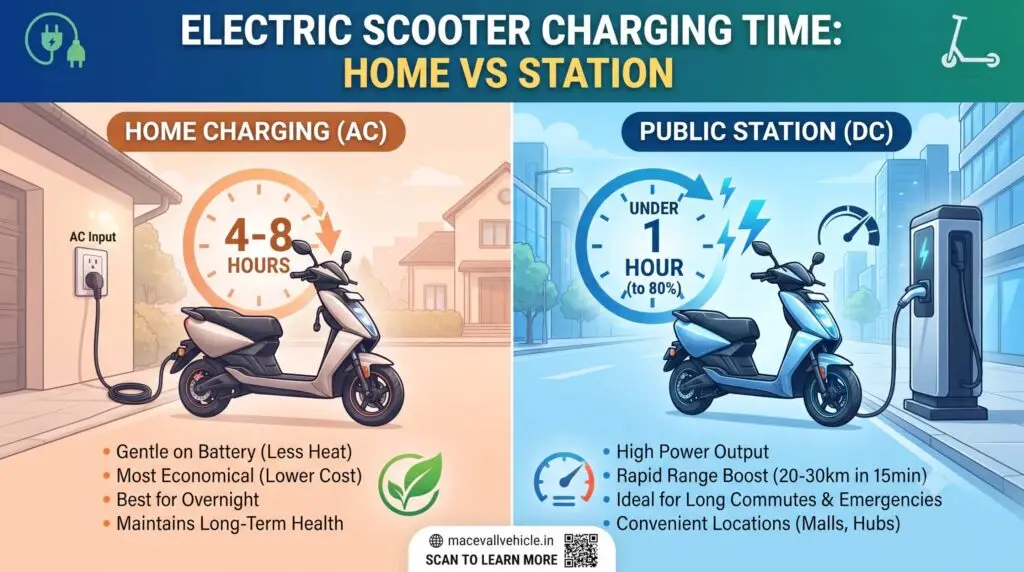
Electric scooter charging time at home vs station depends heavily on your hardware and your lifestyle needs. Home charging typically utilizes AC (Alternating Current) power, which is gentler on your battery and perfect for overnight “fill and forget” routines. In contrast, public charging stations often leverage DC (Direct Current) fast-charging technology. This high-voltage delivery bypasses your scooter’s onboard charger to pump energy into the cells at a much faster rate, often reaching 80% capacity in under an hour.
The Benefits of Home Charging
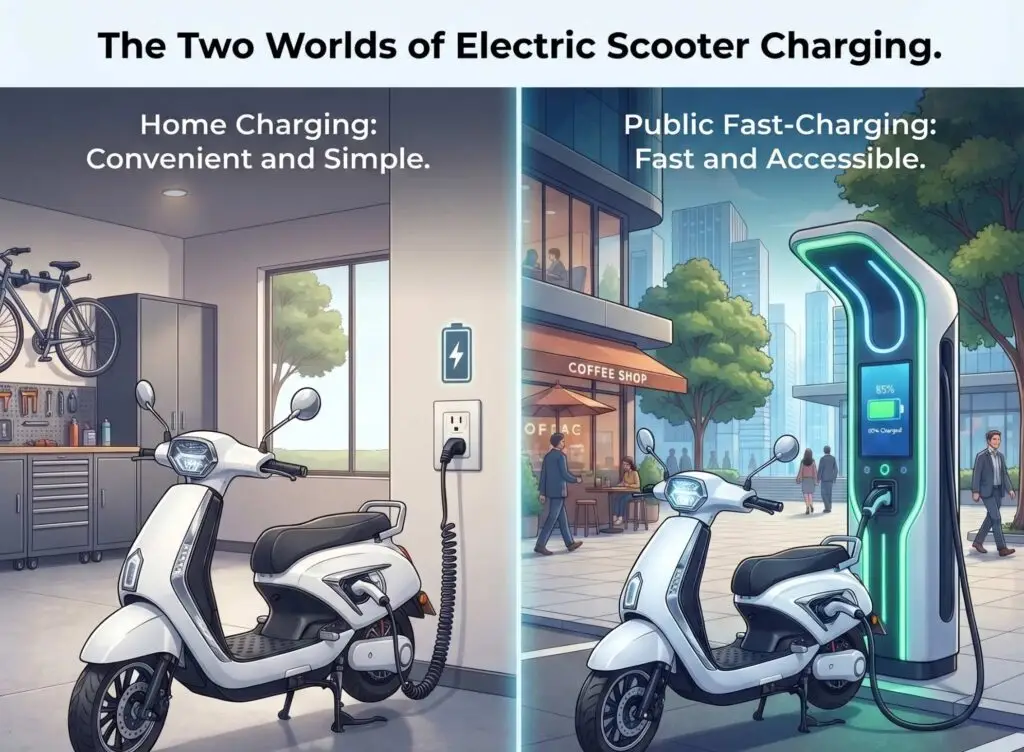
Electric scooter charging time at home vs station comparisons almost always favor home charging for cost-efficiency and battery longevity. When you charge at home, you are using your own electricity supply, which is usually the most economical option. Furthermore, slow charging is “kinder” to your lithium-ion battery. It minimizes heat generation, which is the primary enemy of long-term battery health. By allowing the cells to balance themselves during a steady 4–8 hour charge, you ensure your scooter maintains its peak performance for years to come.
When to Utilize Public Charging Stations
Electric scooter charging time at home vs station dynamics change when you are on a long-distance commute or in an emergency. Public charging stations act as your “safety net.” They are strategically placed in malls, tech parks, and transit hubs to provide a rapid range boost when you need it most. While the cost is generally higher than home charging due to the convenience and service fees, the sheer speed—often providing 20–30 km of range in just 15 minutes—is an unbeatable advantage for urban explorers or delivery riders who cannot afford downtime. Once visit MAC-EV.
Key Factors Influencing Charging Speed
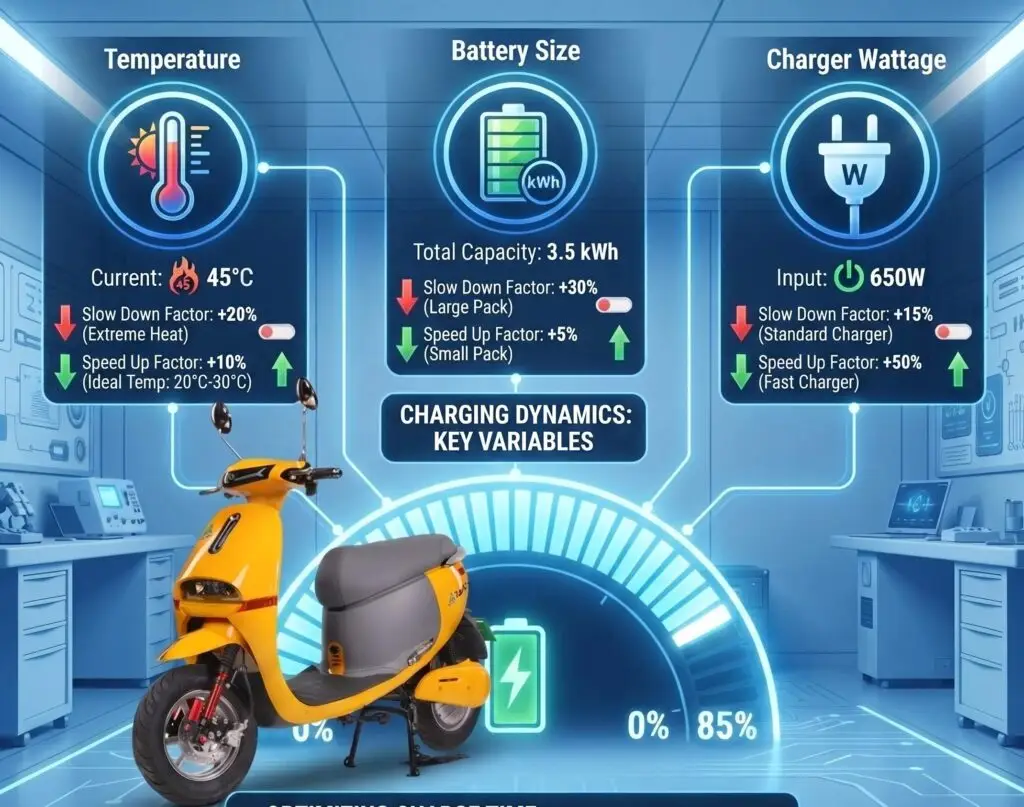
Electric scooter charging time at home vs station metrics are never uniform across all vehicles. Several technical variables dictate how quickly your battery fills up:
- Battery Capacity: Larger batteries (measured in kWh) naturally take more time to reach 100% regardless of the charging source.
- Charger Output: A 600W home charger will always be slower than a 3kW or 6kW public fast charger.
- Environmental Conditions: Extreme heat or cold can force the Battery Management System (BMS) to throttle charging speed to protect the cells.
- Battery Health: As your battery ages, it may accept charge less efficiently than it did when it was brand new.
Best Practices for Optimal Battery Life
Electric scooter charging time at home vs station habits should prioritize longevity to maximize your investment. We recommend a “smart” approach: make home charging your daily staple, keeping your battery between 20% and 80% for most of your commutes. Reserve fast-charging stations for those days when your schedule is packed or you have traveled further than your daily average. Always let your battery cool down for 15–20 minutes after a long ride before plugging it in to prevent heat stress. READ MORE..
Safety and Maintenance Tips
Electric scooter charging time at home vs station safety is non-negotiable. Always use the original charger provided by the manufacturer. Third-party or low-quality adapters can provide inconsistent voltage, potentially damaging your BMS or, worse, creating fire hazards. Ensure your home socket is properly earthed and keep your charging port free of dust and moisture. If you notice any unusual burning smell or excessive heat during the process, stop immediately and contact a professional.
READ: How to Increase your electric scooter battery life
Frequently Asked Questions (FAQs)
1. Is it bad to fast-charge my scooter every day?
While modern batteries are built to handle it, frequent fast charging generates more heat than slow home charging. For the best long-term battery health, prioritize home charging as your primary method.
2. Does charging to 100% damage the battery?
Keeping a battery at 100% for extended periods can cause stress. It is ideal to charge to 100% just before you leave for a ride, or set your limit to 80% if you don’t need the full range for that day.
3. Why does charging slow down near the end?
This is a safety feature. As the battery nears full capacity, the charger reduces the power flow to allow the cells to balance and prevent overcharging, which is why the final 20% often takes longer than the first 80%.
4. Can I use a public charger if my scooter doesn't support fast charging?
No, you should only use charging stations that are compatible with your specific scooter model. Using incompatible hardware can lead to severe electrical faults.
5. How much does it cost to charge at home?
The cost is typically a fraction of petrol vehicle fuel costs. A full charge usually consumes 3–4 units of electricity, costing roughly ₹25–₹35 depending on your local residential electricity tariffs.